
If you are someone who is an enjoyer of destroying their mental illness one scroll at a time (not me; I am normal), then you might have seen some alarming news this week around multiple AI companies announcing that we’re on the verge of a Terminator-style Skynet takeover because the models are getting ‘too powerful’.
I call BS on that (and I will get back to that point in more detail later before I go off on a massive tangent), because despite these claims, Meta just launched yet another fairly underwhelming AI product that can browse the web, spend your money, dig through your social media and messages, and plug into your other apps and software on your behalf.
Introducing ‘Muse’ – Meta’s ‘personal AI agent’
Much to the annoyance of the UK dad rock band Muse (because Zuckerberg decided he wanted their social media handles and tough tits, I guess), Meta launched Muse on 8 September 2026, describing it as a secure, private personal AI agent that ‘proactively helps with people’s goals’ and ‘suggests ideas’. It’s only in the US for now, where your data is sold to the highest bidder, and regulation is typically a lot more loosey-goosey than it is in the UK and EU. There will be free and tiered paid plans, and at some point it might integrate with those stupid Meta AI Glasses (or nonce goggles, as I like to call them).
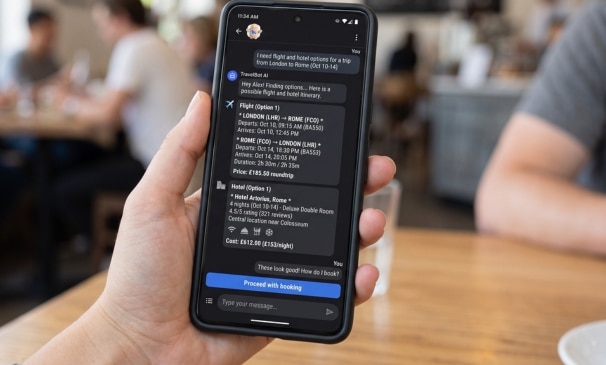
Powered by Meta’s ‘Muse Spark’ model, it can browse, fill in forms, negotiate, and check out on your behalf via Stripe’s Link, with Shop Pay and 1Password “coming soon” (see my blog post on agentic commerce if you want to know more about that); and it does at least ask permission before sending emails or spending money. A separate ‘Sentinel’ agent gatekeeps what it’s allowed to do online to keep that in check, and it can remember personal details unprompted (e.g. getting a summary of liked Instagram accounts, though why TF anyone needs to do that is beyond me).

I’m sure with the right set-up it probably can reduce life admin, but I’m still not convinced most people have the time or technical know-how to make use of a tool like this. Plus, it’s not really anything new – if you are tech-savvy enough, you could have already built these AI workflows yourself. That being said, removing the human from the loop when doing things like shopping, planning trips, or even summarising what your fave content creators have been up to will undoubtedly have an impact on digital marketing strategies. How this unfolds will depend on what the rollout and adoption looks like in the US, so for now, on this side of the pond, we just need to wait and see.
Why won’t Muse be coming to the UK/EU just yet
Unlike the Wild West regulatory laws around data privacy and AI we see in the US, which are very yeehaw for corporations and not very yeehaw for consumers, the EU and UK are more cautious. Arguably annoying for consumers who want to access this technology, but overall, better for all of us in the long run.
AI personal agents that can access so much of your online life come up against the same regulatory brick wall as agentic commerce, though maybe even worse, as it’s not just based around payments.
First up, we have the EU AI Act (full effect August 2026). Among other things, an agent acting and paying on your behalf sits right in the crosshairs. The UK has its own concerns around access to consumer payment data – I won’t bore you with the details, but Strong Customer Authentication is just one massive hurdle to overcome for agentic payments, as agents hit a 3D Secure wall without you doing that annoying login to your online banking to verify the payment for something that costs like 3 quid.
There are also already pretty strict laws around data protection, which most tech companies get around by simply asking for permission. Muse can access WhatsApp conversations and emails, your calendar, your Instagram activity (and it’s not confirmed if that will extend to what you post, DMs, or photos of your kids), plus it ‘remembers’ things unprompted – which, in my view, goes against a lot of what GDPR set out to protect consumers from. It’s hard to see how Meta could obtain genuinely informed, explicit consent for a tool like this under GDPR, given the scale of personal data involved and the difficulty of explaining what an autonomous agent might do with it if something goes wrong.
All in all, with Meta already being fined multiple times for not keeping user data safe, I can’t see Muse becoming mainstream in Europe any time soon (unless someone gives the regulators a serious brown envelope to look the other way, which is also entirely possible).
What are people using Meta Muse for?
Despite it only being around for a week, people are actually doing things with Muse in the first hours/days post-launch, and it’s useful to understand real-world applications. That being said, I’ve not seen anything beyond screenshots claiming what it can do, so who actually knows what is hype vs reality.
According to this post from Emplifi, users have been utilising Muse for:
1. Inbox/calendar/daily admin – connecting email and calendar to get daily briefings, surface deadlines, unsubscribe from lists
2. Travel, booking and purchase decisions – trip planning, monitoring ticket availability, summarising local events
3. Subscription and bill management – reviewing and cancelling unused subscriptions
4. Saved content and recommendations – turning years of saved Instagram/social content into an organised ‘content bank’
5. Morning briefings – a daily digest of email, calendar, local events
6. Job hunting – scanning listings, saving relevant roles, tracking deadlines (OK, this one might actually be handy if I lose my job to AI lol)
These examples are still pretty underwhelming when set against ‘the world’s first personal AI agent’ billing from Meta. I mean, unsubscribing from email lists and building a content bank from old Instagram saves is a long way from the ‘life admin, solved.’ claim, and I feel like the gap between the ambition of the launch language and the reality of what early adopters are actually doing with it is… pretty lame.
This leads me nicely into my next question: “Will people actually use it”?
So, will most people actually use Meta Muse?
If Meta doesn’t want another flop like the Metaverse, this is the $80bn question.
Research already shows that 60% of UK shoppers remain mistrustful of using AI agents for end-to-end shopping missions. Now, when it comes to spending your hard-earned cash, trust is paramount. But I think the same barrier applies to personal information and what your online activities are, too. I, for example, shared an Instagram Reel I saw this week with precisely two people who I think are also tapped enough to have laughed at it.
And given Muse’s far deeper access (email, WhatsApp, payment methods, social media activity), I’m not sure most people are willing to let a bot have a sneaky peek at what they are up to online, especially when you look at the companies behind this technology, who are not exactly renowned for being ethical. I certainly fall into that category – the ‘convenience’ simply doesn’t outweigh the risks of these companies feeding all my data into their LLMs, for whatever (probably evil) purposes.
We have to remember that Meta is a company whose core revenue model is ads and data. While they state that Muse “does not share a user’s conversations or virtual-machine data” with ad systems… that’s also what ChatGPT said it would never do in its early days. And now if you’re on a free ChatGPT tier, you get ads. Plus, as I’ve already highlighted, you only need to look at Meta’s history of run-ins with regulators to know that is probably a lie.
It’s also worth noting that many people struggle with technology as it is; so the barriers to adoption might be yet another stumbling block. Onboarding or setup friction is likely: linking wallets, granting granular permissions, and even knowing what prompts to use will undoubtedly limit who can be arsed to use it.
Then there are a whole bunch of people who will just not see a use for it. And a bigger bunch of people will just think it’s stupid, or are repulsed by AI in general to begin with (that’s more than 50% of people, BTW).
But if it does take off, what do marketers need to consider?
If AI personal assistants like Muse do end up becoming mainstream, there are a lot of considerations for brands from a marketing perspective.
AI is already making it more difficult to get in front of potential customers through LLMs retrieving information without citations or links; AI Overviews (AIOs) are now dominating the top of search results, pushing the top organic results lower and lower, and the siloed nature of a tool like this compounds that issue further. Consumers won’t be the ones seeking out options and researching before they make a purchase – a bot will – and with access to so much information about an individual, it might even be better at it.
The ad industry’s clearly clocked this too. Two-thirds of US ad buyers say they’re paying closer attention to ‘agentic ad buying’ this year, and 41% of US and UK marketers think the main benefit of ‘agentic AI in advertising’ will be tighter CPA and ROAS optimisation.
There aren’t plans for paid placements at launch, and Muse doesn’t share conversations or data with Meta’s ad systems (yet). This means customers who delegate a task to Muse are unreachable through the usual paid-media journey. This has the potential to cause issues for brands that generate significant revenue via Meta ad spend currently.
Discoverability becomes even more important, meaning the need to structure websites and data feeds toward clear, machine-readable product information the agent can find and evaluate is a must. This means keeping pricing, stock status, shipping costs, and delivery information bang up to date, and easy to access. And if we do get to the point where agentic commerce picks up, the checkout flow itself must be simple. For now, look to reduce unnecessary steps in booking/purchase flows that could prevent a bot from being able to execute a payment, and keep an eye on how agentic commerce payment protocols develop.
It’s also worth rethinking what ‘conversion’ even means here as well. The second someone saves your post, drops you a message, or asks an agent to find something similar to what a creator posted, they’re already in the consideration set. Which changes how you should think about creator content too; it’s not just top-of-funnel awareness anymore. If an agent’s watching what someone engages with, a good creator partnership is feeding it information it might use to make a purchase decision later, even if that person never goes back to the original post.
Content continues to be super duper key. Write specific, useful stuff that actually answers questions people have; don’t just bang on about the brand, and lean hard into reviews and UGC alongside your usual SEO and digital PR to build up relevancy and authority.
As well as new rules designed to make it easier to cancel subscriptions in the UK, these tools present a new problem for businesses with a recurring payment model: an agent that proactively audits and cancels subscriptions on a user’s behalf is a new kind of churn pressure. If you want to retain those customers, demonstrable ongoing value needs to be obvious to an agent doing the assessing.
It’s not all doom and gloom for marketing teams, though. If personal AI assistant agents like Muse end up handling the repetitive admin and basic workflow tasks, that’s genuinely time back for the bits of the job that still need an actual human: strategy, creative thinking, and the calls an agent just can’t make. Providing a human still actually checks all the tasks handled by AI agents, though, cos it LOVES to make shit up.
But if it flops?
A lot of signs are pointing to the AI bubble bursting. Investors are starting to wonder if they will ever get the massive payouts they were promised, and the hype around AI being ‘too powerful’ just seems like an excuse to not release newer models as fast as nobody is being particularly won over by incremental improvements to processing speed or quality. Plus, AI fatigue is becoming a real thing. Consumers are sick of AI images and ads, seeing brands as lazy or cheap when they use them.
And with growing evidence that AI is genuinely making people dumber, as well as making people harm themselves, or act like total dicks that think they know better because ‘ChatGPT told them so’, there may be a point when the number of people repulsed by AI goes even higher than the 50% figure we’ve already reached this year.
Zuckerberg himself has compared the current AI spending boom to the dot-com bubble, and I feel it’s worth noting the irony of this statement given his own Metaverse record and the launch of Muse.
The frankly underwhelming early use cases are exactly the kind of ‘billed as revolutionary, actually pretty mundane’ gap that made the Metaverse land so badly with the public. Muse is different, and who knows, it could be the first genuinely useful mass-market agent… or it could be Meta’s next “we spent billions on a product nobody asked for”.
I don’t see Muse rolling out here soon (at least not in its full form), but for UK- and EU-based marketers, it’s still worth watching even if there is nothing to act on yet.
I’ll be watching it closely, not only because I would love nothing more for Meta to have another product that absolutely bombs, but also to see what it reveals about the AI industry’s economics (and about the gap between AI launch hype and actual early usage) rather than the product itself.