

After enjoying the all-new Browser Media UX Games post yesterday, I couldn’t help but feel Ashleigh’s pain when she was moaning describing her frustration when browsing blinds online:
… there are only 8 products on each page! You have to click through the pages to see the different designs…
It got me thinking about what it means to give visitors to your site a choice, whether it’s between products, services or whatever else. There’s power in making a choice. Offering users the chance to decide what they believe is best for them personally means they’re fully in control of their situation – they write their own destiny, which is something McClelland and Burnham claim we all crave.
What Ashleigh experienced though, other than annoyance at the never-ending-clickage, was too much choice. The more choice we’re offered, the harder it is to make a decision. Tim Ash describes our Three Brains and their roles in our ability to make decisions:
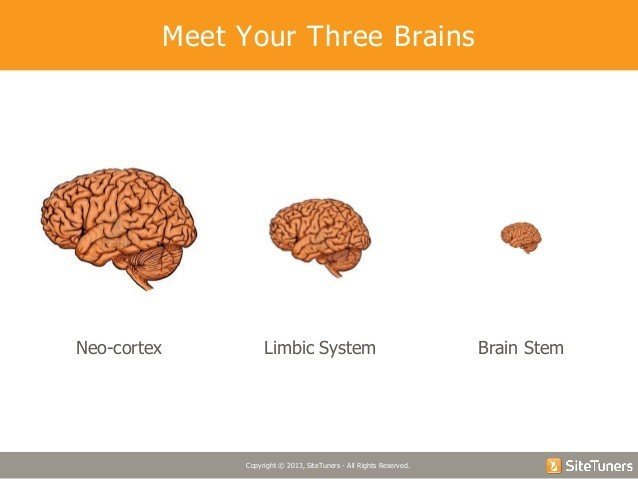
- The NeoCortex – This is what separates us from the animals, the reasoning part of the brain
- The Lymbic System – This is present in all animals and forms emotions such as our likes and dislikes
- The Brain Stem – This is the automated part of the brain for every animal and is the instinctive part of the brain
The Brain Stem makes 95% of our decisions and it is this part of users’ brains we look to tap into by creating a few clear choices, avoiding the dreaded decision paralysis.
Consider Miller’s Law
As an ex Psychology Student, I love me some George A. Miller, and his Magical Number 7 is just one of many reasons for my doing so.
His article suggests that a person holds 7 ± 2 pieces of information in working memory at any one time. Things have changed since 1956, and there are more