

Considering the work that goes into blogging – the research, the writing, the promotion – the shelf life of the average blog post is quite disconcerting. One day it’s all front page of the website and social sharing, and the next, forgotten.
Naturally some types of posts stick around longer than others. News, for example, is only news for a short window of time and is unlikely to hold much relevance a week or so after being published.
Contrastively, blog content that is not tied to a date – “evergreen content“, if you will – can remain relevant and attract visits for months or years after being published. In such instances it’s important to ensure the content is as relevant for new users, as it was for old.
Here are some quick tips for identifying your best performing blog posts from way back when, and for optimising them for new users.
Identify top performing posts
Start by firing up Google Analytics and heading to the All Pages report. Use the search box to filter out any non-blog pages, and set the date range to 12 months (or longer, if you feel it necessary).
You’ll now see a list of your blog pages ordered by number of pageviews:
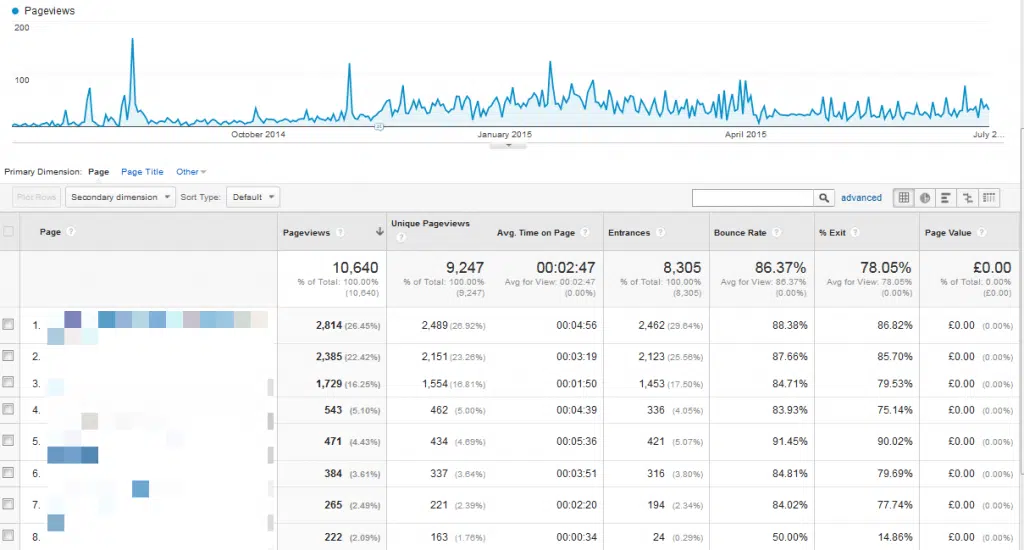
The top performer in this instance was published almost 12 months ago, and while visitor numbers fluctuate month to month, they are consistently high enough to warrant further investigation. Note too the average session duration. At over three minutes, this post is evidently interesting enough to hold a reader’s attention, even 12 months on from its original publish date.

To see where visitors to this page are coming from, you can add a secondary ‘Source / Medium’ dimension to the page report:

This report shows over 90% of visits to this page come via Google organic search, which would suggest the post has maintained some pretty solid SERP visibility over the past year.
Tip: To find out exactly w