
Last year Google rolled out a new and improved version of its popular Search Console tool. As well as offering a vastly improved interface and some new reporting functionality, the new Search Console also gave users access to a greater pool of performance data via its Performance report.
More recently, Google announced a major change in the way the Performance report will handle data across canonical URLs, which is pretty big news for regular users of the tool, particularly users who manage multiple versions of a single site.
Currently, if a website has multiple properties, for example, a desktop site and a separate mobile site on a m. domain, users have to view Performance reports via two separate Search Console accounts. This is all about to change; starting at the end of next month, all data within Performance reports will be assigned to the canonical URL.
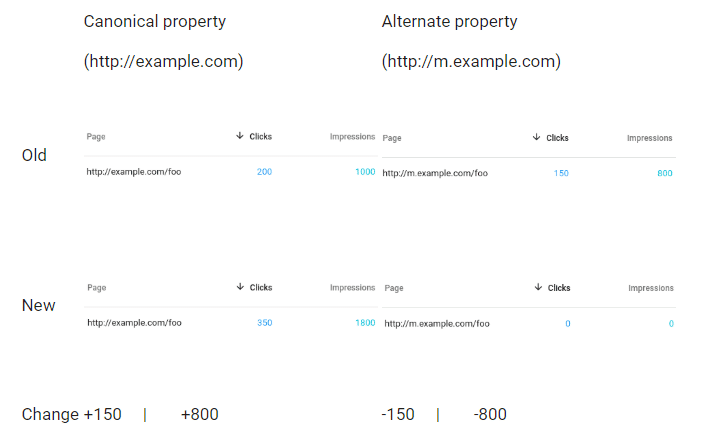
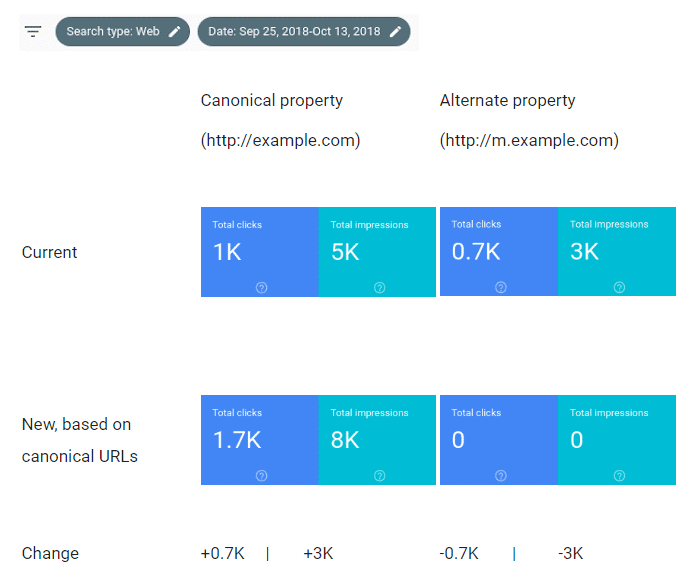
As well as mobile properties, this will also affect AMP pages, which are currently treated as separate entities within Search Console. At an individual URL level, this means all data will shift from secondary, or non-canonical URLs, to the canonical, or ‘master’ URL. Similarly, at property level, all data will shift from the secondary property (for example the mobile property) to the canonical property. Consequently, AMP property traffic is likely to drop to zero in most cases, unless of course, the AMP page is the only page, and therefore the canonical version.
The major benefit of this change, according to Google at least, is that it unifies search metrics for a single piece of content, giving users a more holistic view of performance.
Here’s an example of how the reports will look after the update:
And at individual page level: