
We were first introduced to Google+ on June 28th 2011 when it was launched in it’s invite-only testing phase. 2 months later Google+ threw open it’s doors and allowed anyone to create an account, but it’s fair to say that since the initial peak in interest the G+ buzz has reduced to little more than a gentle hum.
But earlier this week that buzz was revived as Google announced phase 2 in it’s social domination strategy – Google+ Pages, which aims to expand on people-to-people networking and allow users to ‘build relationships’ with the businesses, brands and products they love.
So what sets Google+ Pages apart from standard user profiles?
- Pages can’t add people to circles unless the page is added first or mentioned
- Pages can be made for a variety of different purposes (brands, shops, celebrity figures, sports teams) whereas profiles are strictly for ‘real people’
- A page’s default privacy settings are public
- Pages have the +1 button
- Pages can’t +1 other pages, nor can they +1 stuff on the Web
- Pages don’t have the option to share to ‘Extended circles’
- Pages don’t receive notifications via email, text or in the Google bar
- Pages can’t hangout on a mobile device
- Local pages include information about a business’ physical location (map, address, opening hours, contact details)
That last point about local pages is an interesting one, and raises the question “What if I’ve already claimed my business on Google Places?” Google explained;
“Currently, Place pages and Google+ Pages must be managed separately. A Place page provides information about a business and makes it easy for customers to find local businesses on Google Maps and local search; while a Google+ page provides business owners with additional ways to engage, build relationships and interact directly with customers.”
Much like personal profiles, G+ pages use circles to segment different groups of connections. For business pages, the pre-sets include ‘customers’, ‘VIPs’, and ‘team members’, making it easy to share selected information with certain groups of followers. This could present some very interesting opportunities from a customer service perspective – offering certain deals to valued customers, for example.
Another key feature of G+ is ‘Hangouts’ – a feature that allows users to set up one-click video conversations with customers, fans or colleagues. This is another potentially interesting customer service tool, but also presents an opportunity for business owners to gain face-to-face feedback about their products or services, conduct mini workshops or webinars and collaborate, chat or brainstorm with colleagues.
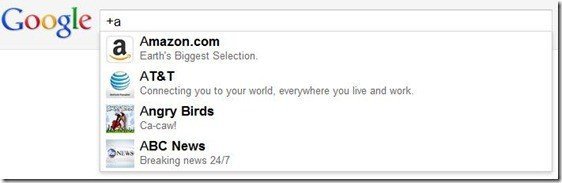
A term that’s been thrown around a lot this week is Direct Connect. Direct Connect lets you quickly navigate to a Google+ page (and even add that page to your circles) directly from the Google search bar. Google is still experimenting with this feature so it only works for handful of ‘big brand pages’. For example, search for ‘+a’ with autocomplete enabled and you’ll be presented with a handful of G+ pages beginning with ‘a’, such as Amazon and Angry Birds.
