
Libby mentioned in her recent blog post that a big trend we’re bound to see increasing in marketing through 2017 will be personalisation, and as such the ad world is looking at ways to monetise this.
One method is geofencing. The technology has been around for years, but geofencing in its current incarnation is fairly recent, and is looking to be big next year.
What the heck is geofencing?
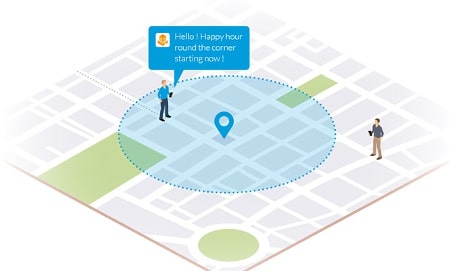
Geofencing uses GPS technology to define a virtual perimeter for a real world geographic area. In terms of advertising, this geofence is used to trigger a notification or advert on a consumer’s mobile device when they’ve entered a certain area. This could be anywhere you like, from a neighbourhood to a particular shop or street.
It usually works using a combination of GPS, WiFi and, to a lesser extent, cellular data. Whereas it used to take the form of using cellular data to send a text message to consumers within a certain area, it’s now most commonly facilitated by applications which require customers to opt in to location services and push notifications, so that they are aware that their GPS data is being used – unlike before.
There are two types of geofencing; active and passive. Active is when an application is open on the shopper’s device, actively using GPS services (which can be a big drain on battery), whereas passive geofencing is always on, working in the background, not using GPS.
How can geofencing be utilised?
Geofencing can be great if you’re a retailer operating on a local scale. There are several ways you can use it to enhance your business by targeting customers on a super granular level:
- It can remind consumers that they’re near your shop by sending them adverts or offers if they are within a certain proximity of your location
- It can be used to tempt them away from competitors by sending them adverts or offers for your shop if they are near a competitor’s location
- It can be used in conjunction with non-direct competitors to enhance sales e.g. sending an ad or offer to customers of a nearby flower shop for your confectionary business
- It can be used to deploy targeted offers and promotions in a certain area based on local events or holidays e.g. offering 20% off purchases to customers within a certain proximity of your confectionary shop in the days leading up to Valentine’s day
- Not only can you localise your advertising, you can personalise it too; by using the purchase history of past customers, you can provide them offers for products that they are likely to either be purchasing again (a routine purchase) or that they might be interested in based on similar products they’ve bought in the past. (Bonus tip – if you cross reference this with a local event or holiday, the likelihood of conversion will be high.)
- You can also target customers as they dwell. For example, a shopper has walked into your store and has been browsing for a few minutes or more. You can send them a product advert or offer after a set amount of time in order to entice them to purchase.
The upsides to geofencing
As well as helping to increase your sales, it can help increase loyalty; ads can be used to offer shoppers some sort of reward for walking into a participating store e.g. a discount code or gift card. You can also use it to tell previous customers about new lines or products that you’re now selling that might interest them.
You’ll be able to see how frequently a customer visits your shop. This will enable you to reward regular shoppers, carry out win-back campaigns for shoppers that haven’t visited in a while, and target first time visitors with first time buyer discounts or rewards, to maximise conversions from every type of customer.
It also adds depth to your customer data; not only will you be able to analyse whether targeted customers convert better than walk-ins and how well differe