
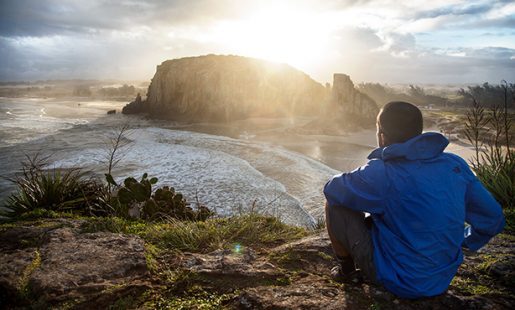
Outdoor lifestyle brand, The North Face recently landed itself in hot water following a badly misjudged SEO campaign that involved hijacking Wikipedia pages for popular travel destinations.
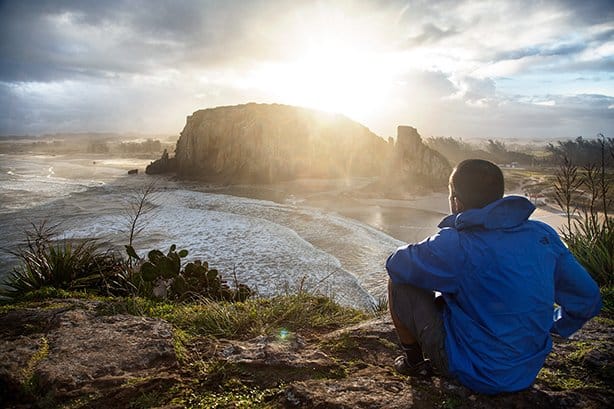
In an effort to expose The North Face logo to travel-curious Google users, generic images were replaced with alternative shots featuring people sporting The North Face gear.
The brand was subsequently slammed by almost everybody, including The Wikipedia Foundation, for its unethical and shortsighted approach. The creative agency behind the campaign, Leo Burnett Tailor Made, also caught its fair share of criticism.
The agency’s biggest mistake wasn’t necessarily the act itself – looking at it from a purely creative point of view it’s hard to argue the idea wasn’t original – but releasing a video that explained, in detail, how it gamed Wikipedia for The North Face’s benefit, was very shortsighted. Not only was the video an admission of guilt, but it was also incredibly self-congratulatory in tone, which only served to infuriate people further.
In the weeks that followed, the story inspired more than 300 articles and news stories which collectively generated over 30k social shares. That’s a lot of buzz around a campaign that most considered to be an epic failure.
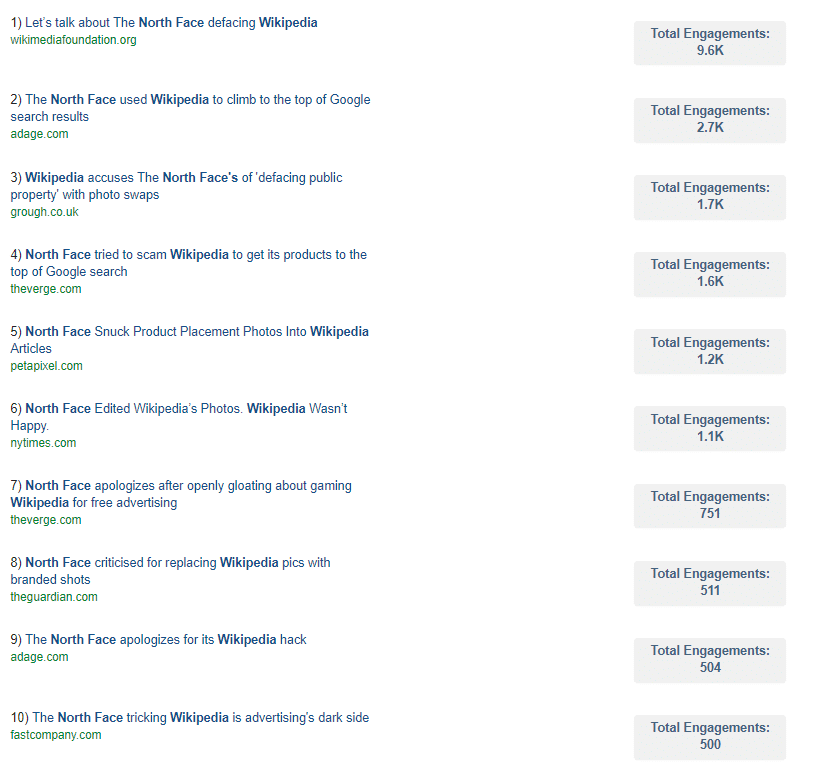
But the wins didn’t stop there. I noticed that a few of the sites damning The North Face for its antics were linking back to the brand’s website/s, which