

Tomorrow (6th December) marks Small Business Saturday, a day celebrating the UK’s small businesses.
If you own or work for one of the nation’s 5.45 million SMEs, but don’t know your meta tag from your metatarsal, fear not. We’ve put together five simple, practical actions you can take to improve your site’s performance in the search engines – even if you don’t have the help of an agency or a subscription to paid SEO tools.
Compress images
Site speed is important for both the usability and search performance of your site, but some of the factors that impact it may involve the help of a developer. One thankfully that doesn’t, is ensuring that large images aren’t slowing your site down. You can use free tools online to resize your images, or download a free plugin that compresses images as they’re added to your site.
Be mindful of any large videos too. Remember, a faster site equals better rankings and happier visitors.
Claim (or update) your Google Business Profile
Ok, so this one isn’t technically an improvement to your website, but I couldn’t talk about small businesses and not give it a mention.
This is the information that appears on the right hand side of Google’s search results about a company. It is free to claim and update, allowing you to manage how your business shows up on Maps and Search.
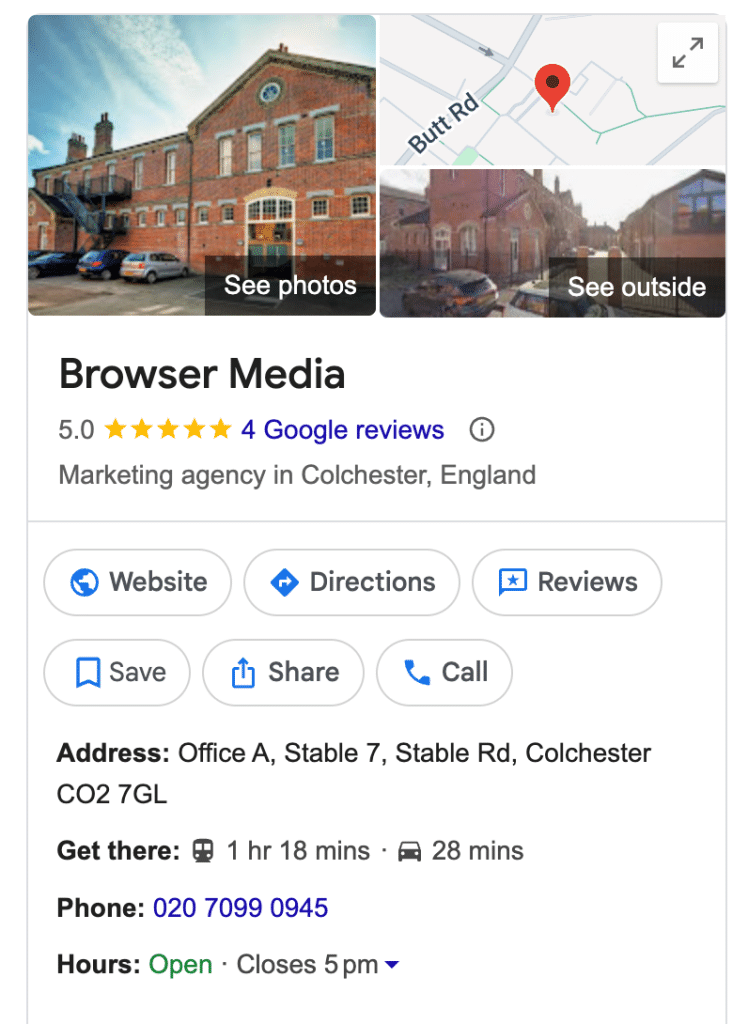
You can include all sorts of useful information for potential customers such as your address, opening hours and contact details. You can also add links to key pages of your website, as well as relevant keywords.
Google rewards active, complete profiles with better visibility, so it’s worth adding photos or posting updates, regularly.
Optimise your page title and description
Your page title and meta description are what appear in the search listings when you type your query into Google. While they aren’t official ranking factors, they do have a huge influence on click through rate, which in turn can affect rankings.
Try to include your keywords near the beginning of your page title, and give a short, compelling description of your page in the meta description. There are limits on the length of both of these, but it’s calculated by pixels rather than characters. Therefore, it can be helpful to use an online tool to see how these will likely appear in the search listings.
In the screenshot below I’ve had a look at the page title (large blue text at the top) and meta description (normal text under the URL) I might use for this blog post.

Write blogs based on keyword research
Think about what your customers might search for. Then write blog posts answering those exact questions.
For example:
- “How to choose the right accountant for a small business”
- “How often should you service a gas boiler?”
- “Wedding photography checklist for couples”
While keyword research tools are really useful, you can use other sources to find popular searches, such as Google’s autocomplete suggestions, or People Also Ask functions. For more tips take a look at this article.
Improve your site’s internal linking
Internal links help Google understand your site structure. On each page or blog post, add links to other relevant pages.
You’ll see I’ve done that a couple of times throughout this blog post.
This helps users navigate, and helps search engines crawl your site more effectively. Plus, it couldn’t be quicker or easier to do.
By making just a few small tweaks to your website, you could see a difference in traffic, without investing a huge amount of time or money.